HERNANDO COUNTY, FL — A child was bitten by an alligator while swimming in the Weeki Wachee Preserve in Hernando County on Labor Day, according to the Hernando County Sheriff’s Office. Officials said the preserve is closed to swimming, and the attack happened after the child and other children entered the restricted water.
The alligator punctured the child’s arm and leg, but authorities said the injuries were not considered life-threatening. The victim was transported to a hospital in Hudson after being brought to safety. Hernando County Fire Rescue helped remove the children from an isolated sandbar where they had taken refuge after the attack.
Children sought shelter on a sandbar before rescuers reached them
Officials said the group of children moved to an isolated sandbar after the bite, where they waited until rescue crews arrived. The response from Hernando County Fire Rescue ended the immediate danger and allowed the injured child to receive medical care.
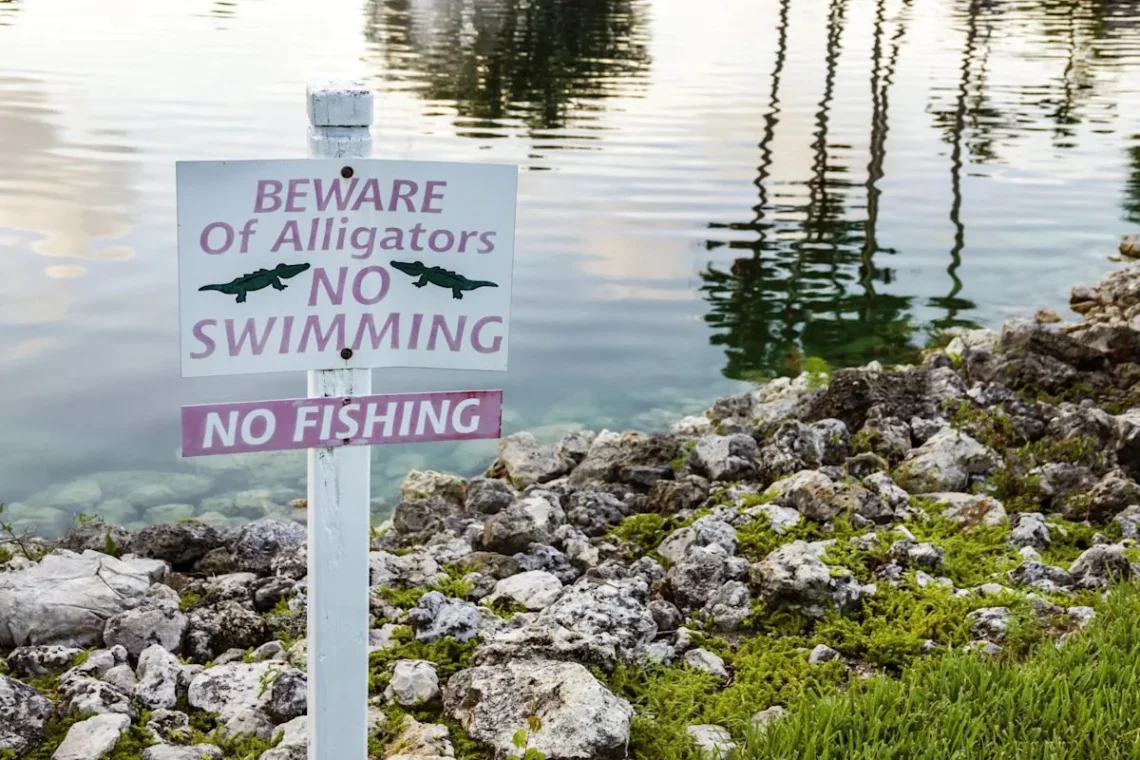
The sheriff’s office identified the incident as a swimming violation because the preserve is off-limits for that activity. That detail matters because alligator encounters are far more likely when people enter water where wildlife activity is expected and human use is restricted. In this case, the location itself was a major part of the risk.
Authorities did not say how many children were with the victim or how long they were in the water before the attack. They did say the child’s injuries were serious enough to require a hospital trip, but not severe enough to be described as life-threatening.
Officials estimate the alligator measured 9 to 12 feet long
Law enforcement and wildlife officials estimated the alligator at between 9 and 12 feet in length. After the attack, a licensed Florida wildlife trapper set traps in an effort to capture the animal. Officials did not immediately say whether the alligator had been caught.
The size estimate underscores why experts treat even routine-looking freshwater areas with caution. Large alligators can move quickly in shallow water and may strike with little warning, especially when people are swimming or wading near the edge. That risk is one reason swimming restrictions are posted in some preserves and waterways.
Alligator attacks remain rare, but state and local officials warn that a single encounter can turn dangerous very quickly. In this case, the child survived and was able to get help, but the incident still required a coordinated response from deputies, firefighters, and a wildlife trapper.
Florida wildlife officials say most attacks happen at the water’s edge
Officials cited a figure from the Northern Palm Beach County Improvement District saying the odds of being attacked by an alligator are about 1 in 24 million. Even with that low probability, they warned that the highest-risk situations are the ones that place people closest to where alligators naturally feed and move.
According to officials, about 90% of attacks occur while people are wading or swimming at the water’s edge, where an alligator can lunge at prey. That warning fits the circumstances in Hernando County, where the child was in the water rather than on dry land.
The message from authorities was straightforward: follow posted restrictions and use extreme caution around waterways. In preserves, lakes, canals, and other freshwater areas, that means respecting closures and avoiding water access points that are not intended for swimming.
Warm months can make alligators more active and protective
Officials also pointed to the time of year as a factor that can raise the danger. During mating season, which runs from May through September, male alligators are more aggressive, and females are protective of nests. The attack happened on Labor Day, which falls near the end of that active period.
That seasonal behavior does not mean every alligator will act aggressively, but it does increase the need for caution in late spring and summer. Families visiting freshwater areas are especially advised to stay out of posted swimming bans and to keep children close to shore and away from vegetation or marshy edges.
Wildlife agencies regularly warn that people should never assume a waterway is safe just because it looks calm. Alligator habitat can extend into shallow, quiet areas where swimmers may not notice an animal until it is already close.
The preserve’s swimming ban was central to the incident
The sheriff’s office stressed that the Weeki Wachee Preserve is not open for swimming, making the attack the result of entering a restricted area. That distinction is important because officials often rely on closures, signs, and access rules to reduce contact between visitors and wildlife.
When those limits are ignored, the chance of a dangerous encounter rises. In this incident, the children’s movement into the water put them in the same space as a large predator, and the alligator was able to bite before rescuers reached them.
Authorities are urging the public to remain alert around all freshwater environments in Florida. Their advice is to respect local restrictions, keep children out of off-limits water, and treat any posted swimming closure as a serious safety measure rather than a suggestion.