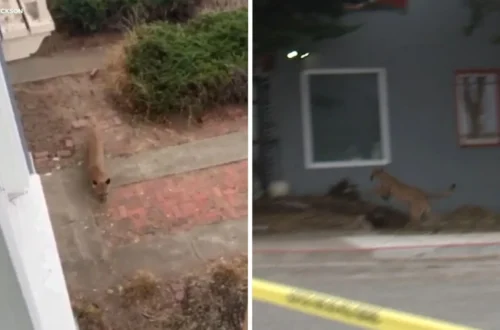
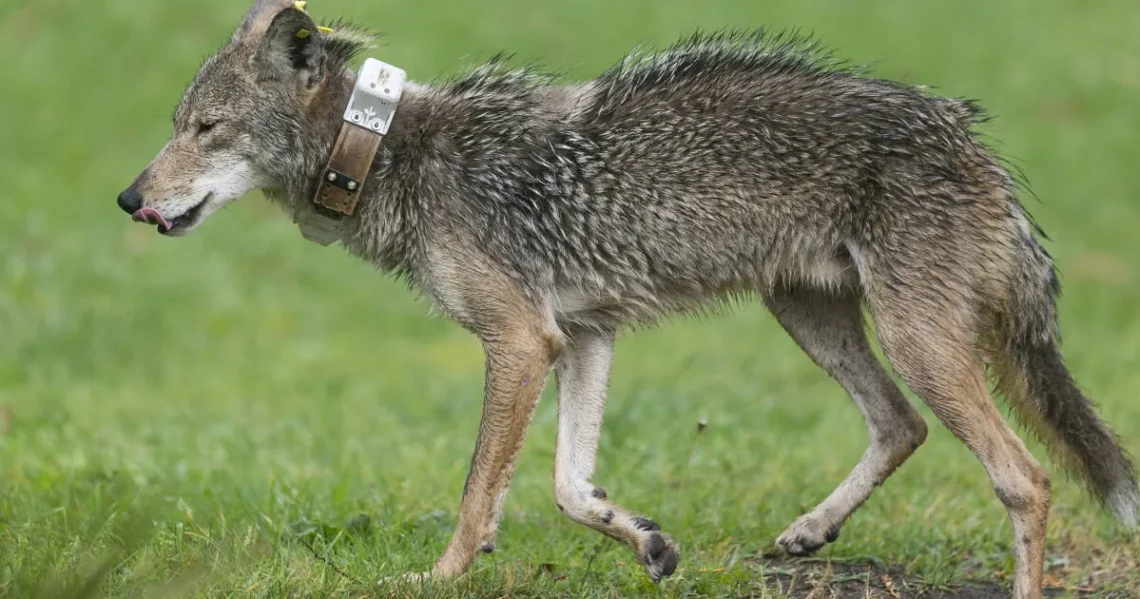
HAVERHILL, MA — Police in Haverhill are urging residents to stay alert after a coyote confronted a 2-year-old on Friday night and then bit a neighbor who stepped in. The neighbor used a shovel to fight the animal off, and the coyote was later seen limping or running away before it was hit by a car, according to police.
State wildlife officials say the incident is alarming but does not point to a larger rise in coyote attacks across Massachusetts. Dave Wattles, a black bear and furbearer biologist with the Massachusetts Division of Fisheries and Wildlife, said the state’s coyote population is steady and that only a small number of people are bitten each year.
How the Haverhill encounter unfolded near Broadway and Route 97
Police said the coyote was first noticed “eyeballing” the child before a neighbor stepped between the animal and the toddler. At that point, the coyote bit the neighbor in the arm. The person then fought back with a shovel, forcing the animal away.
The coyote was believed dead at first, but police said it ran off after the car strike and was later seen heading into a wooded area behind Solid Slice Pizzeria & Pub near Broadway and Route 97. The Haverhill police drone unit searched the area, but officers did not find it. Police have said the animal may have died, though they have not been able to confirm that.
The encounter prompted warnings for residents to keep an eye out for coyotes in the area, especially after a child was involved. Officials have not said the toddler was injured.
State wildlife officials say Massachusetts coyote numbers stay relatively stable
Wattles said Massachusetts currently has between 10,000 and 12,000 coyotes, and that total does not tend to rise sharply from year to year. He said the animals “increase and decrease slightly,” but generally remain around the same average level over time.
That means a high-profile encounter does not necessarily predict a larger wave of attacks. Wattles said he does not expect the Haverhill incident to trigger more incidents, and he pointed to the state’s overall bite count as very small. In his view, the animal involved in Haverhill was an outlier, not evidence of a population problem.
He also said the coyote appeared rabid in a video he reviewed. If the animal was struck by a car, he said, that would also help explain why it did not survive long after the encounter.
Why Eastern Massachusetts sees more human-coyote conflict
Wattles said conflicts with coyotes are more common in Eastern Massachusetts, where people may respond too passively when an animal approaches too closely. He said residents should avoid treating coyotes like they are harmless neighborhood wildlife.
Instead, he recommends people act aggressively to drive the animal away if it comes into a yard or approaches a person. That means yelling, making loud noises and chasing it out. He said that kind of behavior teaches coyotes to avoid people rather than linger near homes.
Wattles said coyotes communicate with one another through dominant behavior, and people can use that to their advantage. By showing that humans are not easy to approach, residents can reduce the chances that a coyote becomes comfortable around neighborhoods, pets or children.
Rabies precautions are urged after any coyote bite
Officials said anyone bitten by a coyote should get medical attention right away and begin rabies treatment as a precaution. Wattles emphasized that a person cannot know for sure whether an animal is rabid unless it is captured and tested.
He said the recommendation applies even if the animal’s behavior seems unusual or the bite is minor. Because coyotes are mammals, public health officials advise starting rabies shots after any bite before test results are available or if the animal cannot be confirmed.
Wattles said that once a rabid animal starts showing symptoms, it usually deteriorates quickly. That is why authorities treated the Haverhill coyote as a likely rabies case even though they could not recover it for testing.
The Haverhill bite follows other recent coyote encounters in Massachusetts
The Haverhill case came nearly two months after a separate cluster of coyote encounters in Lexington, where at least two dogs survived attacks. The recent history has raised local concern, but state wildlife officials say it should not be read as a sign that coyotes are suddenly becoming much more aggressive statewide.
Wattles said there are only a couple of coyote bites reported in Massachusetts in an entire year. He said that pattern has stayed relatively consistent and does not suggest a broad change in coyote behavior.
For residents, the practical lesson is to stay alert, keep children close and respond quickly if a coyote comes too near. Wildlife officials say the safest approach is to discourage bold behavior before it turns into a confrontation.