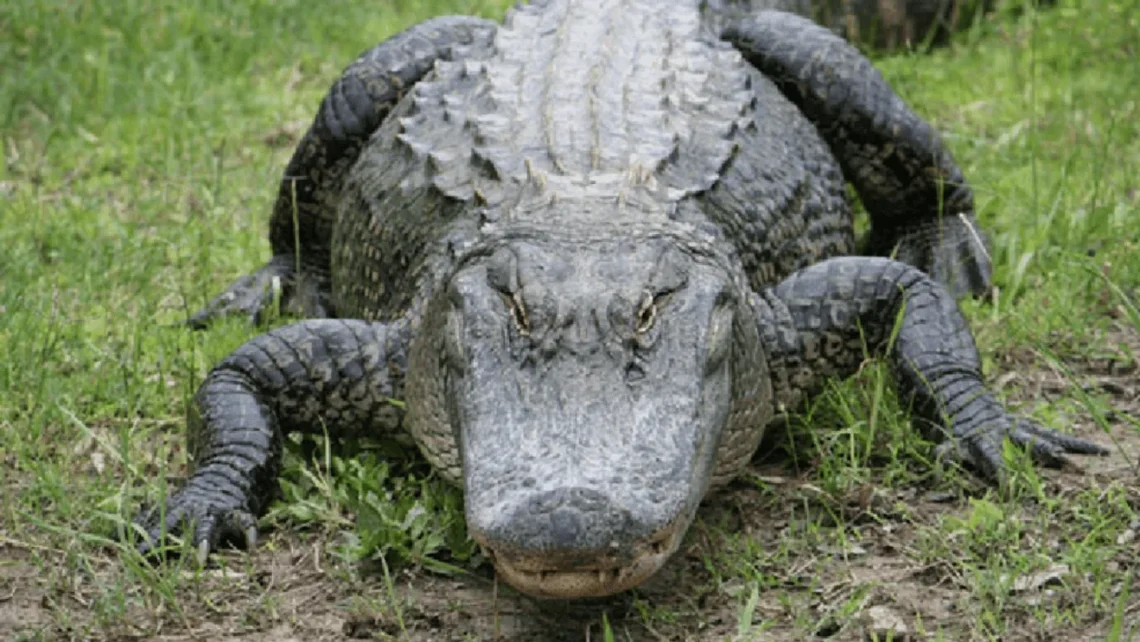
HERNANDO COUNTY, FL — A child was bitten by a large alligator while swimming in a prohibited area of a Hernando County preserve on Labor Day, according to the Hernando County Sheriff’s Office. Deputies said the gator was estimated at 9 to 12 feet long.
After the attack, the child and several other juveniles were left stranded on a sandbar until Hernando County Fire Rescue reached them. The injured child had non-life-threatening wounds to an arm and a leg and was taken to Bayonet Point Hospital for further care.
Officials also said an alligator trapper was sent to the area and placed traps nearby as part of the response.
Deputies say the swim happened in a restricted preserve area
The Hernando County Sheriff’s Office said the child had been swimming where public access was not allowed. That detail is central to the case because the area was not meant for recreational swimming when the bite happened.
Authorities did not immediately say exactly which preserve was involved, but they confirmed the attack occurred on Labor Day in Hernando County. The sheriff’s office shared that several juveniles were on the sandbar when rescue crews arrived, suggesting the group had to wait for help after the animal encounter.
The Florida Fish and Wildlife Conservation Commission is investigating the swimming violation. That inquiry is separate from the medical response and the efforts to catch the alligator.
Rescue crews reached the stranded children on a sandbar
Hernando County Fire Rescue responded after the attack and helped get the juveniles off the sandbar. Officials did not say how long the group remained stranded, but they confirmed rescue crews were needed after the bite.
The child who was bitten was taken to Bayonet Point Hospital, where the injuries were treated. The sheriff’s office described the wounds as non-life-threatening, which indicates the child was hurt but not in critical condition.
Incidents like this can become more dangerous when people are separated from easy land access or are unsure how close they are to wildlife. In this case, the stranded group was able to get assistance before the situation became worse.
Trapper set traps after the alligator was reported in the area
After the attack, an alligator trapper responded to the preserve and set traps in the area, according to authorities. That step is a common part of local wildlife response when a large gator has been involved in a biting incident.
Officials have not said whether the animal was immediately captured. They also did not provide additional details about the alligator’s behavior before the attack or whether it was later removed from the area.
The response reflects how Florida agencies typically handle dangerous wildlife encounters: first secure the injured person, then assess the animal threat, and then decide on trapping or removal if needed.
The incident adds to a run of recent Florida alligator attacks
This Labor Day bite came after several other alligator incidents in Florida in recent months. In August, a 10-foot alligator bit a woman’s arm while she was swimming in the Silver River in Marion County.
In July, a woman in Orlando was killed in Seminole County after an alligator attacked her in about 3 feet of water near Little Big Econ State Forest. Following that deadly attack, wildlife officers captured and removed two large alligators, one measuring 13 feet and another about 12.5 feet.
Those cases show how quickly an alligator encounter can turn serious, even in water that may appear shallow or calm. They also highlight the role of state and local wildlife officials after a dangerous encounter.
Wildlife officials urge caution around Florida waterways
The Hernando County case is another reminder that Florida’s preserve areas, rivers, and other waterways can hold large alligators even when people do not expect to see them. Swimming only in allowed locations and paying attention to posted restrictions can reduce risk.
When alligator activity is reported, officials often advise people to keep their distance, leave the water, and call authorities rather than trying to approach or feed the animal. In this case, law enforcement and wildlife agencies were already involved once the bite was reported.
For families and groups, the safest move is to treat unknown water as potentially hazardous and avoid entering restricted areas. That caution is especially important in places where large reptiles are known to live and move through shallow water.