MIAMI, FL — Hunters taking part in Florida’s annual Python Challenge can once again compete for prizes while helping remove invasive Burmese pythons from the Everglades. This year, the event comes with an unusual bonus: a local restaurant says anyone who arrives with a captured python may be able to trade it for a complimentary pizza made with snake meat.
The challenge is part wildlife control effort and part public contest, with participants given a structured way to help reduce the number of nonnative snakes in south Florida. Organizers and businesses involved in the effort say the goal is to turn an invasive-species problem into a hands-on removal campaign, while also finding uses for the animals after they are caught.
How the annual Python Challenge works in Florida
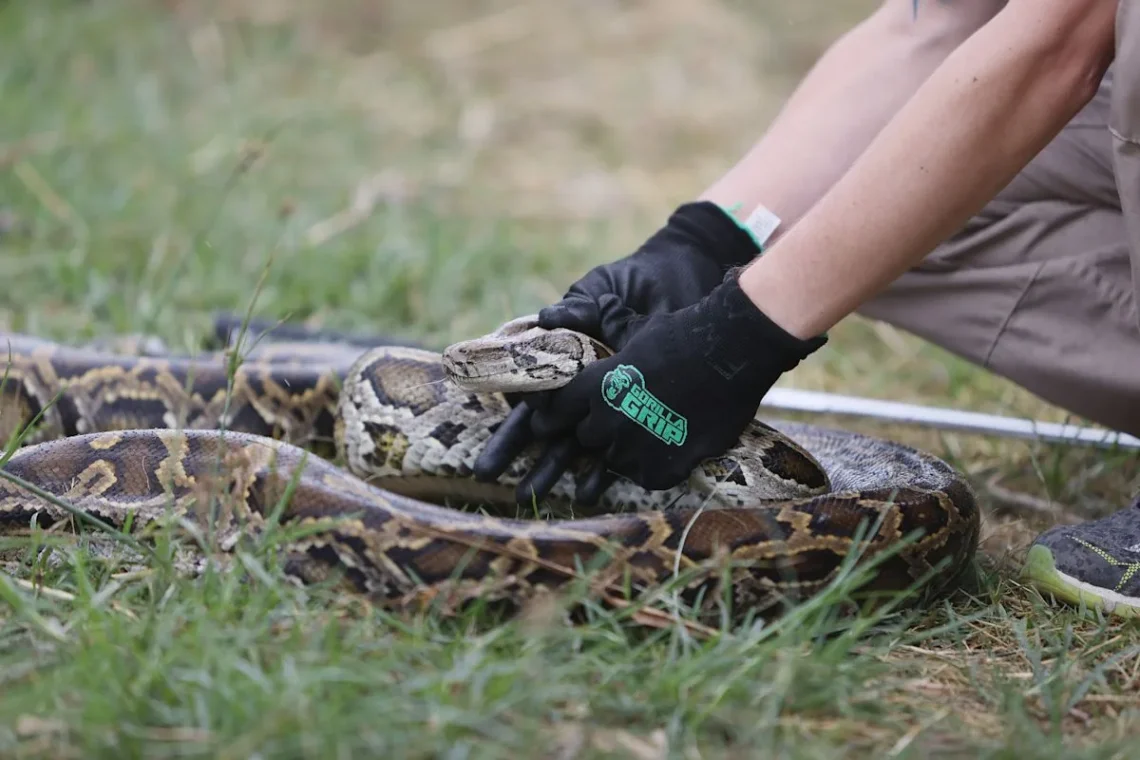
The Florida Python Challenge was launched in 2013 as a way to shrink the invasive Burmese python population in the Everglades and nearby areas. The snakes are native to Southeast Asia, but they have become firmly established in Florida’s wetland ecosystem. State officials do not know exactly how many are out there, and estimates have ranged from 30,000 to 300,000.
Last year, about 1,000 hunters took part and removed 294 snakes during the challenge. The event gives the public a chance to compete for prizes while contributing to a broader effort to control the spread of the species. Officials and wildlife experts have said the snakes’ continued presence is a serious conservation issue because they are difficult to track and remove once established.
Why Burmese pythons are a problem in the Everglades
Burmese pythons are a major invasive-species concern because they can disrupt native food webs and pressure wildlife already living in the Everglades. The Florida Fish and Wildlife Conservation Commission says the snakes can crowd out native lizards, threaten pets and people, and eat threatened or endangered animals.
When a large nonnative predator becomes established in a place like the Everglades, the effects can spread beyond one species. Wildlife managers say the damage can ripple through the environment and upset the natural systems that nearby communities depend on. That is one reason Florida continues to push organized removal efforts rather than relying on passive control methods.
A Florida restaurant offers pizza in exchange for python removals
Wildman’s Pizza, Pasta and Python is adding a food-based incentive to this year’s event. Owner Dustin Crum told NBC6 that successful hunters can bring in the pythons they catch and swap them for a free pizza at the restaurant.
Crum described the idea as a first-of-its-kind exchange, saying he believes he is “the first place in the world to accept python as currency.” The restaurant’s involvement is meant to give hunters a reward after they remove the snakes from the wild. NBC6 reported that the business is using the challenge to highlight the animals’ role as an invasive species rather than a novelty.
What the restaurant does with python products beyond pizza
The pizza offer is only one part of Crum’s python-themed business. NBC6 said the restaurant also operates a store that sells items made from python skin, bones, and oil taken from the fat. Crum said he does not limit his menu or merchandise to one invasive species either.
He told the station the business also offers “python toppings, python pizza, iguana, you know, whatever.” That approach reflects a broader trend of using invasive animals in food and consumer products after they are removed, something NBC6 noted is seen in other places around the world. In Florida, it also gives hunters another reason to bring pythons out of the swamp and into a controlled setting.
How the pythons spread and why removal remains difficult
How Burmese pythons first became so widespread in Florida has never been pinned down with certainty. One theory points to animals that escaped after Hurricane Andrew destroyed a farm in 1992. Another possibility is that some were released pets, which then reproduced in the wild.
However they arrived, the snakes found a habitat where they could survive and spread. Their population has been hard to measure precisely, and their hidden movement through marshland makes them difficult to catch in large numbers. That is why Florida’s strategy continues to focus on organized public hunts, targeted removals, and incentives that keep attention on the invasive species problem.