COLUMBUS, OH — A rattlesnake bite in California left an Idaho man fighting for his life after he needed an unusually large 54 doses of antivenom. The case, highlighted in reporting from SFGATE, underscores how quickly a venomous snakebite can turn into a medical emergency.
The story also points back to Ohio, where three venomous snake species live in the state. Serious bites are uncommon, but state wildlife officials say the risk is real enough that hikers, homeowners and outdoor workers should know how to avoid snakes and what to do if one bites.
The Ohio Department of Natural Resources says the state’s venomous snakes play an important ecological role, even as encounters remain rare. That includes timber rattlesnakes, copperheads and massasaugas.
Ohio’s three venomous snakes can still pose a serious risk
Ohio is home to the timber rattlesnake, the copperhead and the massasauga rattlesnake. Each species is venomous, though the likelihood of a fatal bite is low when a person gets prompt medical care.
According to the Ohio Department of Natural Resources, these snakes are part of the state’s natural system. Officials say the animals help support the ecosystem, even though fear and habitat loss have contributed to their decline in some areas.
Encounters are rare, but not impossible. That is why wildlife experts stress distance, caution and quick treatment if a bite happens. The concern is not just about remote hiking trails; snakes can also turn up near homes, especially where they find cover, food or shelter.
Timber rattlesnakes remain endangered in southern Ohio
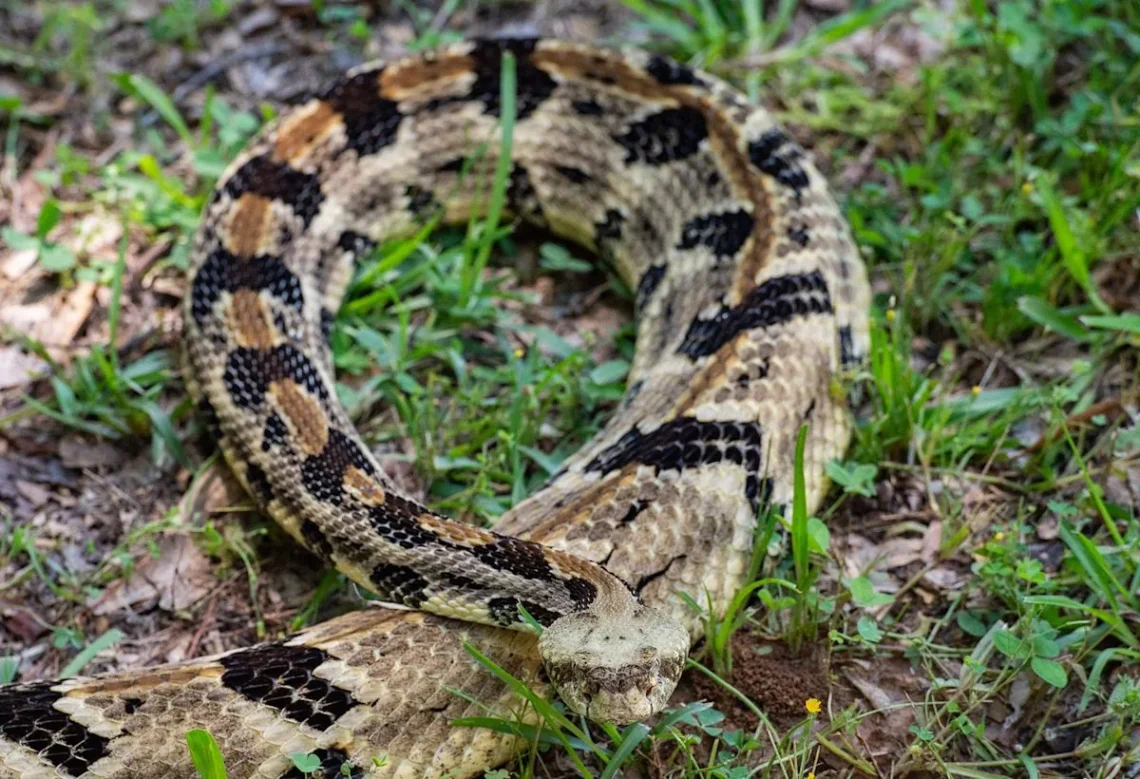
The timber rattlesnake lives in southern Ohio and is among the most venomous snakes in the Northeast, according to the Ohio Department of Natural Resources. Despite that reputation, the species usually avoids people and will often recoil and move away rather than strike.
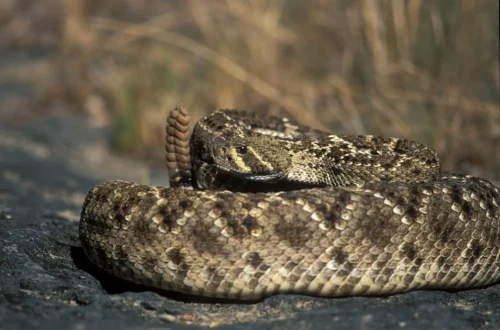
Ohio’s last human death from a timber rattlesnake was recorded in the 1940s. The species has two color phases, both marked by a rattle at the end of the tail. One can appear gray, light brown or yellow with black chevron-shaped bands, while the other is darker with crossbands over a blackish-brown background.
Timber rattlesnakes can grow to about 40 inches long and nearly eight inches wide. Ohio officials say the species is endangered in the state after population losses tied to habitat destruction, human persecution and unregulated collection.
Copperheads are common in southern and southeast Ohio
Copperhead snakes are found more widely in southern and southeast Ohio, including floodplains, ridge tops and rocky hillsides, according to the Reptiles of Ohio field guide. Their coloring gives them strong camouflage, which can make them hard to spot in leaf litter or among rocks.
They can grow to about 3 feet long and usually stay away from populated areas. If encountered, a copperhead may remain still. Wildlife experts warn that it can strike if it feels threatened or is provoked.
Although the snake is venomous and a bite can be painful, deaths are rare because copperheads typically inject a relatively small amount of venom. Even so, a bite still needs immediate medical attention.
Massasaugas are rare, endangered and usually sluggish
The massasauga rattlesnake lives in swampy and wet parts of Ohio and is now rarely seen, according to OhioPARC. The snake once ranged across 30 counties, but its numbers have been reduced by farming and habitat loss.
Massasaugas are also endangered in Ohio. They can reach about 2 feet in length and have rattles at the end of their tails. Most are gray or brownish gray with large spots, though some are entirely black.
Like copperheads, massasaugas usually do not inject enough venom to kill a healthy human. They are generally sluggish and still, but they will bite if provoked. Wildlife officials say they should be treated with caution and left alone.
Experts say quick treatment matters after any snakebite
The Centers for Disease Control and Prevention says about 7,000 to 8,000 people are bitten by venomous snakes each year in the United States, and about five die. The agency notes that the death toll would likely be higher without medical treatment.
Ohio wildlife officials advise hikers and outdoor workers to watch where they step and place their hands, give snakes plenty of space, and never try to handle or kill one. If a bite happens, immediate hospital care is important so antivenom can be started early if needed.
Officials also recommend keeping homes less attractive to snakes by controlling insects and rodents, clearing junk, rocks, brush and boards, and keeping grass mowed. If a snake is found in a living space, the Ohio Department of Natural Resources says it should be captured and released at least a mile away from the home.