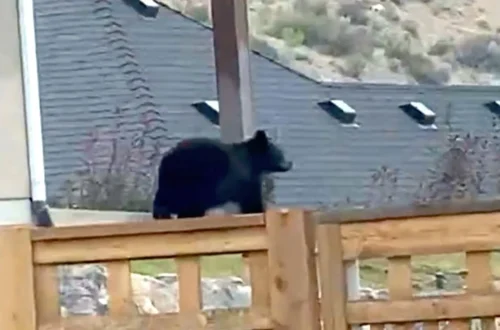
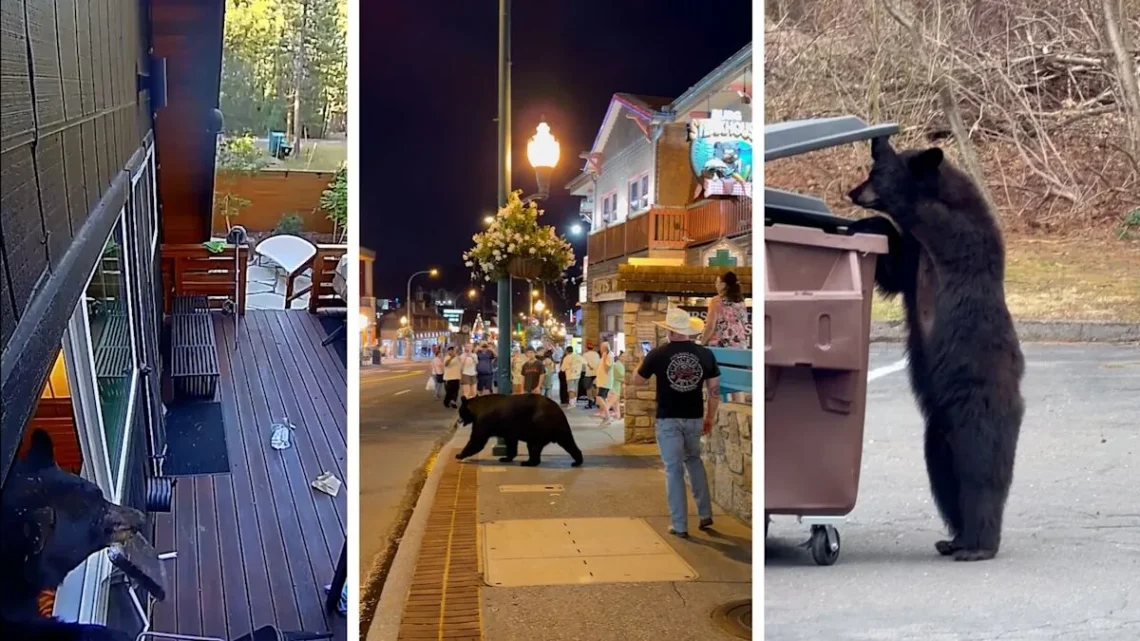
WASHINGTON, DC — Black bear encounters are climbing in at least 15 states this year, with wildlife agencies reporting more calls about bears in neighborhoods, cabins, cars and businesses. Many of the incidents involve bears looking for food rather than acting aggressively, but officials say the behavior is becoming harder to manage as bears get bolder around people.
Reports range from simple sightings to bears breaking into homes, trucks, chicken coops and garbage bins. In Colorado, wildlife officials say calls have surged dramatically, while Utah has recorded a high number of bears in cities. Experts say the trend is being driven by drought, poor natural food supplies and growing development in bear habitat.
Drought and food shortages are pushing bears toward homes and businesses
Wildlife officials in several Western and Southern states say dry conditions are stripping away the berries, acorns, grasses and other natural foods bears normally depend on. In Colorado, Montana, New Mexico, Nevada, Utah, Washington, Wyoming, North Carolina, Oklahoma and Tennessee, agencies have pointed to drought as one reason for the increase in encounters.
Arjun Dheer, California’s statewide black bear coordinator, said low snowpack, warm and dry weather, early snowmelt and late-spring freezes have all reduced available food in parts of the West. As natural calories become scarce, bears range farther and take more risks near developed areas. Chris Servheen of the IUCN Bear Specialist Group said human garbage, bird seed and pet food are especially attractive because once bears find them, they often keep coming back.
Colorado has seen the sharpest surge in bear reports
Colorado has recorded 10,019 bear reports so far this year, more than triple last year and well above the state’s annual average. John Livingston, a Colorado Parks and Wildlife public information officer, said the problem used to be concentrated in just a few counties but is now statewide.
Livingston said he was alarmed by July, when reports had already surpassed all of last year. He said the season is still far from over, with another month and a half of unusually high bear activity expected. Typical fall behavior only adds to the problem, since bears are naturally more active as they prepare for winter hibernation.
Colorado officials have also documented bears jumping on restaurant tables, entering ski lodges, breaking into trucks, taking trash from fire stations and wandering into neighborhoods where they are not usually seen.
A California cabin break-in shows how fast bears learn easy food sources
In South Lake Tahoe, California, Keryn Francisco said a black bear broke through an open window while she and her son were fishing and raided the fridge inside their cabin. The bear ate avocados, brioche buns, croissants, chocolate strawberries and tri-tip steaks, then came back for more and carried food onto the porch.
Francisco said the bear seemed to know exactly what it wanted. Wildlife experts say that kind of learned behavior is common when bears succeed in getting human food. Once that happens, officials say, the animals can become repeat visitors and the behavior is nearly impossible to reverse.
Across California and much of the West, agencies say these encounters are becoming more common as bears search for calories in places where food is easy to find and people are nearby.
Connecticut and Massachusetts are seeing more bears that enter homes
The East is also seeing more conflicts as black bear populations expand in developed areas. In Connecticut, a bear known to officials as Bear 213 and to neighbors as White Paw built a long history of troublesome behavior after being spotted approaching a Simsbury home in 2022.
Over time, the bear broke into homes, a garage, porches, barns and sheds, ripped open freezers and trash cans, and ate frozen cookies and apple cider. Officials said the bear was not easily deterred by people or by dogs, and in 2024 she entered a home with cubs before wildlife staff euthanized her the next day.
Connecticut officials say bears have entered about 60 homes in the state this year. Massachusetts has also seen more home entries, and state biologist Dave Wattles said some of those bears may have learned the behavior in Connecticut.
Officials say most bear conflicts are preventable with better food storage
Experts stress that black bears are not usually looking to attack people. Bears that injure someone often do so after being surprised at close range and responding defensively. Most encounters end without harm, and officials say the public can reduce risk by removing easy rewards.
BearWise and wildlife agencies recommend securing food, garbage and recycling, and never feeding or approaching a bear. They also advise people to consult local wildlife officials for region-specific steps, including how and when to report bear activity. The core message from bear managers is that human habits often create the problem.
As Chris Servheen put it, bears have lived in these places for thousands of years, while people have moved closer to them. Wildlife officials say that means the burden now falls on residents and visitors to keep attractants out of reach and treat every bear as a wild animal.
Tourist towns and crowded neighborhoods are changing the risk
In places such as Gatlinburg, Tennessee, where the Great Smoky Mountains National Park borders a busy tourist city, officials say the mix of dense bear populations and heavy visitor traffic creates constant challenges. The park is home to nearly 2,000 black bears, and some move between the park and town.
Gatlinburg invested $3 million in more than 460 bear-proof dumpsters in 2023 and later posted signs warning that feeding bears is illegal. Janelle Musser of the Tennessee Wildlife Resources Agency said the effort is helping but also producing new problems, because bears are finding other ways to look for food.
Videos of bears breaking into cars, opening doors and running through parking lots may look amusing online, Musser said, but wildlife managers see the danger. When bears learn that people will only take pictures, not scare them away, officials worry the animals may become more dangerous and eventually have to be removed.
Wildlife managers warn that bears are adapting to human habits
Officials across the country say the latest rise in encounters is less about bears becoming inherently more aggressive and more about them becoming willing to cross boundaries that once kept them away from people. Livingston said bears are “just willing to cross lines,” while Musser said many people have grown too comfortable around them.
Bear groups in places such as Durango, Colorado, now post images showing the damage unsecured trash can cause, and agencies say the same lesson applies nationwide. Secure garbage, close windows, keep pets and food secured, and give bears space if one appears nearby.
Wildlife managers say the best approach is simple: do not reward bears, do not corner them, and do not treat them like neighborhood animals. The more often bears get food from people, officials warn, the more likely they are to return and keep pushing deeper into homes and businesses.